Dental Implants in Bethesda, MD & Washington D.C.
Dental implants are the gold standard for tooth replacement. They are an excellent option for individuals who have lost a tooth/teeth due to disease, injury, or other reasons. A dental implant is a small titanium post that is surgically placed into the jawbone, where it acts as an artificial tooth root. Once the implant integrates with the bone, it provides a strong, stable foundation for a custom crown, bridge, or denture. Because the implant fuses with the bone, it mimics the function of a natural tooth and helps maintain the health of the jaw.
At District Dental Surgery, we have experienced periodontists that will help you gain back your natural smile with a quality dental implant.
What is a Dental Implant?
A dental implant is a small titanium post that is surgically placed into the jawbone in order to act as an anchor for a replacement tooth. The implant is designed to provide a strong and secure foundation for all sorts of prosthetics and restorations; this may include crowns, bridges, or full-arch prosthetics. The placement of the implant is a relatively simple procedure that can be completed in-office with little discomfort throughout recovery.
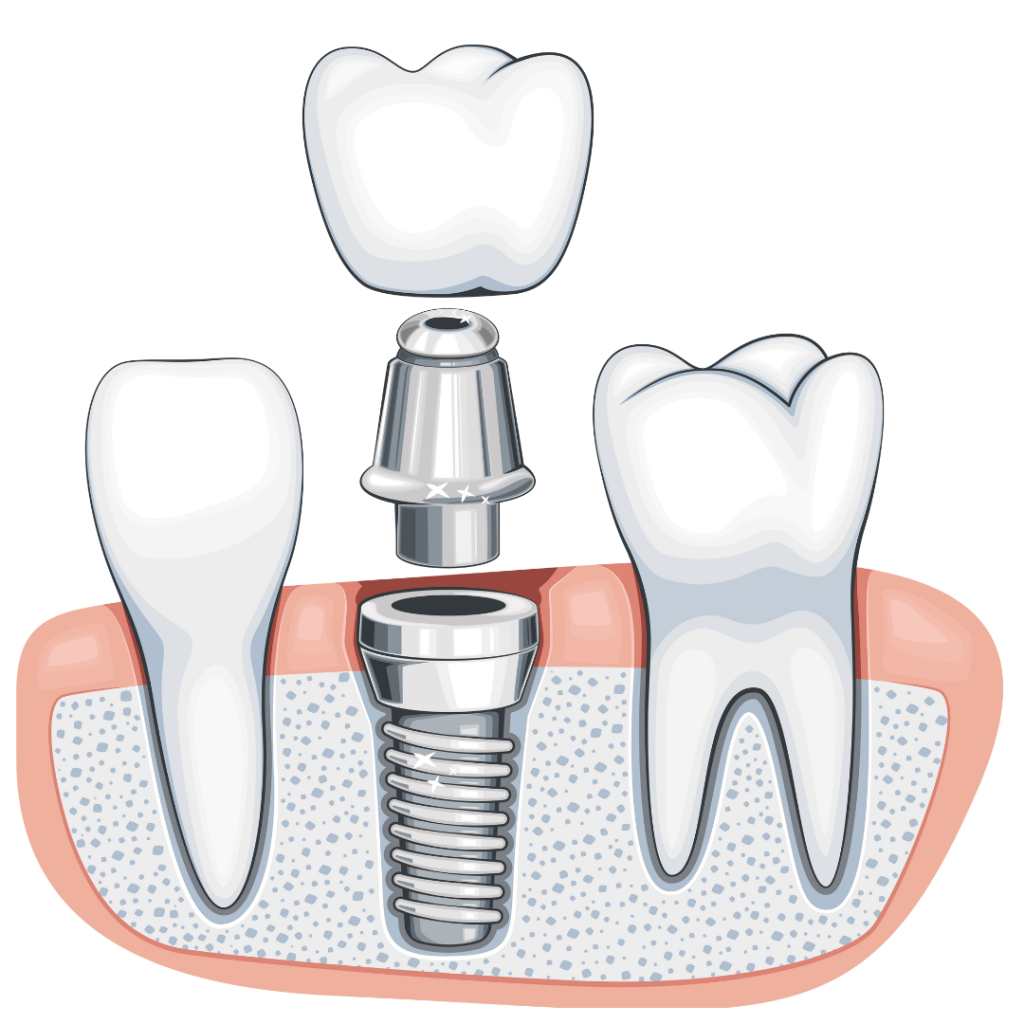
The entire dental implant is composed of three parts:
Implant Post: the small titanium screw that is placed into your jawbone and acts as the root of your new tooth.
Abutment: the “connector” that attaches to the implant post and sits just above the gumline. It holds the replacement tooth securely in place.
Crown (Restoration): the visible part of the implant, your new tooth! Custom-made to match the color, shape, and size of your natural teeth.
What is the Purpose of a Dental Implant?
The purpose is to restore both function and appearance after tooth loss. Implants allow patients to chew comfortably, speak clearly, and smile confidently, without worrying about loose or removable appliances. Beyond aesthetics, implants also preserve oral health by preventing bone loss and keeping neighboring teeth stable. They are designed to be a long-term, natural-looking replacement that feels and functions like real teeth.
Who is a Good Candidate for Dental Implants?
Anyone who has lost a tooth or teeth is a candidate for dental implants. The ideal candidates have healthy gums and adequate bone support, and good oral hygiene habits. Things like mismanaged diabetes, smoking, gum disease, and other uncontrolled medical conditions may affect the ability of the implant to fuse to the bone. Our dentists and periodontists will work with you to ensure your gums and bones are healthy enough to receive the implant.
If the bone where the implant is to be placed has already receded, a bone graft may be performed to provide the volume needed for implant placement.
Types of Implants in District Dental Surgery
1
Single tooth replacement
2
Multiple tooth replacement
3
Total teeth replacement
What to Expect During & After The Procedure:
Step 1. Consultation & Treatment Planning
- We take 3D scans and X-rays to evaluate your bone and design your personalized plan. We coordinate with your restorative dentist to ensure seamless treatment from start to finish.
Step 2: Implant Placement Procedure
- The procedure usually takes less than two hours. We will make small incisions in the gums and place the implant into the jawbone. We place our implants fully guided, allowing us to precisely position the implant in the ideal location for the permanent crown, where the bone is optimal. Once the implant is in place, the gums will be sutured, and in some cases, a temporary dental prosthesis may be attached. We then send the progress report to your restorative dentist.
- Your comfort is our priority. The procedure is performed under local anesthesia, which means the treatment area will be completely numb. You won’t feel pain during the procedure, and most patients report little to no discomfort throughout. For added comfort, we also offer laughing gas (nitrous oxide) and Xanax if you’re feeling anxious or prefer a more relaxed experience.
Step 3: Healing & Osseointegration
- Click for full post-op instructions
- Immediately after the procedure, you can expect to experience some mild swelling and bruising. These side effects are completely normal and will resolve within a few days. It’s important to take it easy for the first few days. Eat a soft diet for the first few weeks, NO hard, crunchy, or sticky foods. We’ll provide you with detailed post-op instructions.
- Over the next 3–6 months, the implant integrates with your bone (osseointegration), and we monitor healing. If desired, your restorative dentist may provide a temporary crown during this phase.
Step 4: Final Prosthetic
- Once the implant has healed and fused to the jawbone, your restorative dentist designs and places the permanent crown. The crown is custom-made to match your natural teeth for a seamless result.
What Can I Eat After Dental Implant Surgery?
A Complete Periodontal Recovery Diet Guide:
Eating the right foods post-operatively is just as important as the procedure itself, because what you eat after surgery plays a big role in how well and how quickly you heal. After surgery, your tissue is delicate and actively healing. The wrong foods can cause irritation, introduce bacteria, or physically disrupt the surgical site. Following a structured diet helps reduce discomfort, prevent complications, and support the best possible outcome.
For a complete list of recommended foods and everything to avoid during recovery, click to download our detailed diet guide.
Day 1
Immediately After Surgery/Day 1:
Keep It Cold and Soft. Right after surgery, your mouth will be tender, and cold foods can help soothe the area and reduce swelling. Stick to things like:
- Smoothies (no straws)
- Yogurt
- Ice cream
- Milkshakes
- Drink plenty of ice water!
Days 2-3
Days 2-3 After Surgery:
Stick to soft, cool, and non-irritating foods.
- Ice cream and sorbet (no nuts or chewy mix-ins)
- Smoothies (no seeds or chunks)
- Applesauce
- Mashed potatoes
- Scrambled eggs
- Yogurt (plain or smooth, no granola or fruit chunks)
- Oatmeal
- Protein shakes
- Broths and blended soups (lukewarm or cold)
- Pudding and custards
- Gelatin (Jell-O)
Tip: If you can, use the opposite side of your mouth when eating. Use a spoon instead of a straw to avoid suction pressure.
Days 4-7
Days 4-7 After Surgery:
You may begin to slowly incorporate more variety, but keep the foods soft.
- Soft pasta, such as mac and cheese or buttered noodles
- Cooked, soft vegetables (steamed carrots, zucchini, squash, sweet potatoes)
- Soft fruits (bananas, canned fruits, avocado)
- Tender cooked meats (ground turkey/beef/chicken, shredded chicken)
- Tofu
- Beans and lentils
- Soft fish (white fish and salmon)
- Pancakes and soft waffles
- Cottage cheese and soft cheeses
Week 1-4
1-4 Weeks After Surgery
As healing progresses, you can slowly return to a more normal diet, while continuing to be cautious and still avoiding anything too hard or sharp.
- Most cooked vegetables and fruits
- Soft grains, pasta, and rice
- Lean meats and poultry
- Soft sandwiches (no crust or toasted bread)
- Turkey, egg salad, tuna
- Muffins or banana bread
- Soft tortillas
Foods to Avoid Until Fully Healed
What to AVOID Until Fully Healed:
- Crunchy, Sharp, or Pointy Foods: Chips, Pretzels, Popcorn, Crackers, Granola, Nuts (almonds, peanuts, walnuts)
- Foods with Seeds or Small Grains: Chia, sesame, poppy seeds, Quinoa, Seeded breads, Berries with small seeds (strawberries, raspberries)
- Sticky Foods: Caramels, Taffy, Gummy candy, Fruit snacks
- Tough & Chewy Foods: Steak, Beef jerky, Chewy protein bars, Dried fruit (raisins, mango, apricots)
- Hard or Crusty Breads: Baguettes, Bagels, Toasted bread
- Raw, Hard, or Fibrous Foods: Raw vegetables (carrots, celery, broccoli), Hard fruits (apples, pears)
- Spicy Foods: Hot sauce, Chili, Spicy curries
- Acidic Foods & Drinks: Citrus (oranges, lemons, limes, grapefruit), Tomato-based sauces, Vinegar and vinaigrettes
- Hot Foods & Drinks: Hot coffee or tea, Hot Soups
- Habits to Avoid:
- Drinking through a straw
- Chewing on the surgical side
- Smoking
- Alcohol
What is the Purpose of a Dental Implant?
The purpose is to restore both function and appearance after tooth loss. Implants allow patients to chew comfortably, speak clearly, and smile confidently, without worrying about loose or removable appliances. Beyond aesthetics, implants also preserve oral health by preventing bone loss and keeping neighboring teeth stable. They are designed to be a long-term, natural-looking replacement that feels and functions like real teeth.
How Long Do Dental Implants Last?
With proper care and maintenance, dental implants can last a lifetime.
Can Dental Implants Replace Multiple Teeth?
Absolutely! No matter your situation, there’s a dental implant solution that can help you chew, smile, and speak with confidence again. Dental implants are one of the most reliable and natural-looking ways to replace missing teeth — whether you’re missing one tooth, several teeth, or an entire arch.
- Single Dental Implant — replaces one missing tooth with a natural-looking result that blends seamlessly with your smile.
- Implant Bridge — replaces several missing teeth in a row using only two implants for support.
- Full-Arch Dental Implants — replaces a full set of missing teeth in the upper or lower jaw with four implants for a fixed, stable restoration that looks and feels like your own teeth.
Our Transformative Results
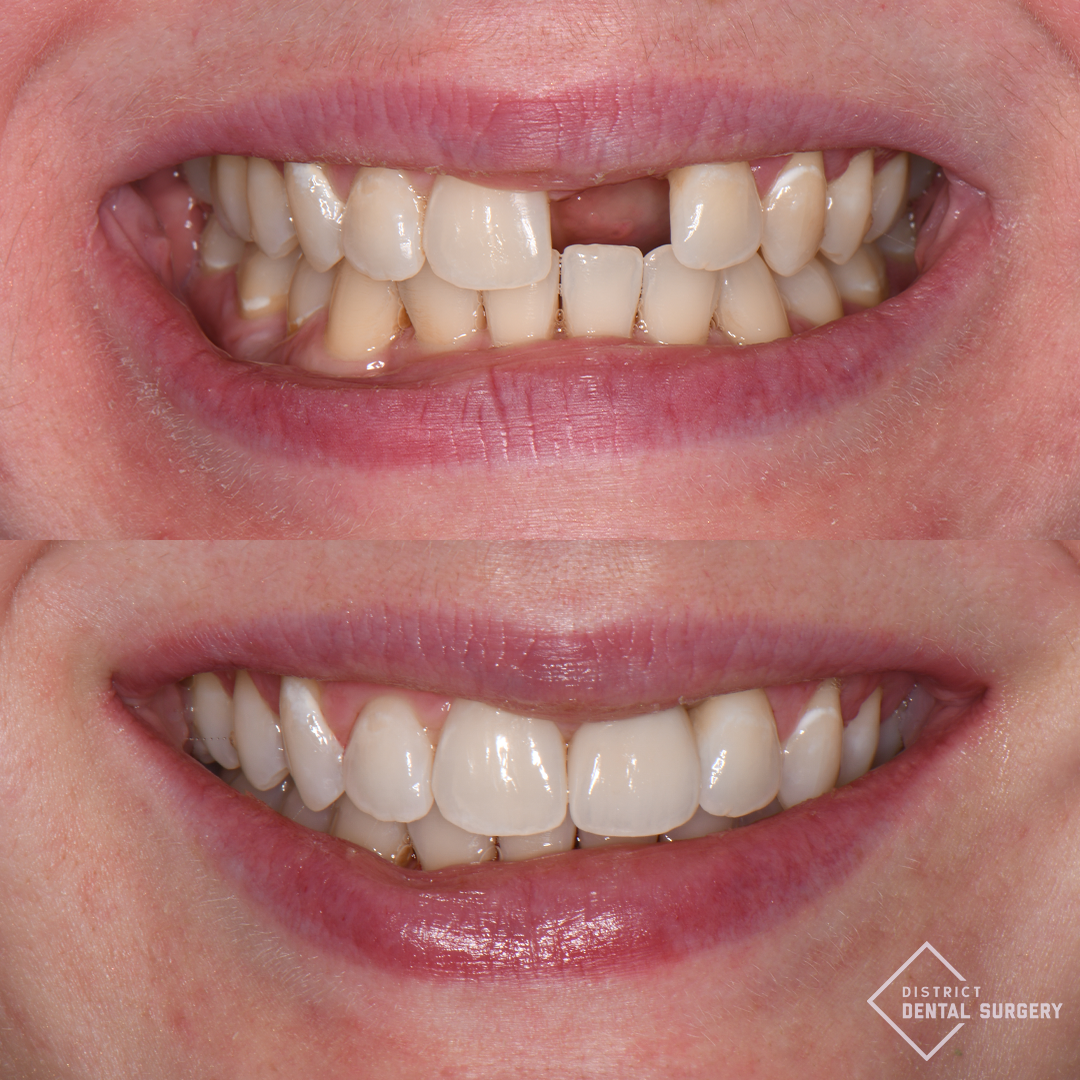
Dental Implant + Bone Grafting
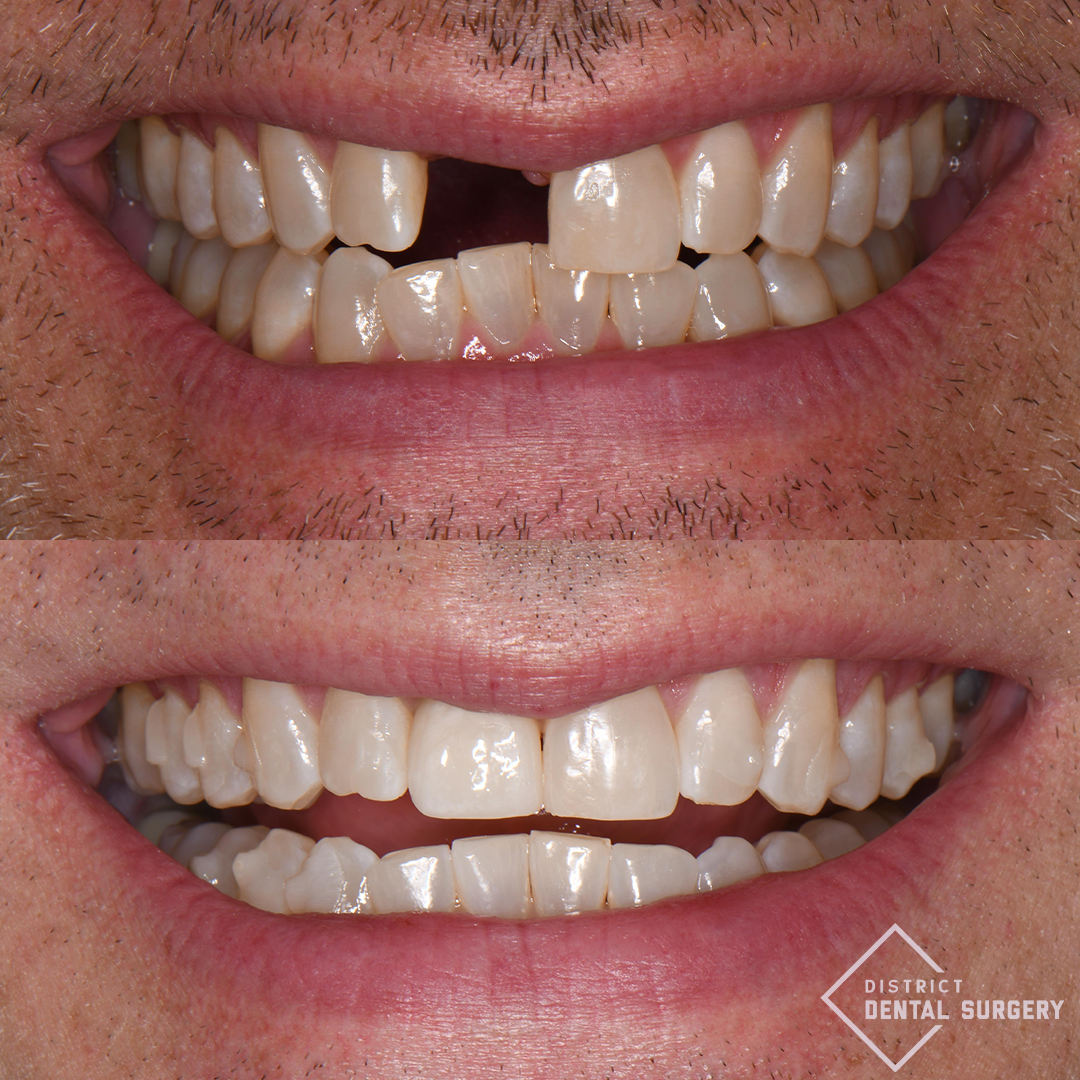
Dental Implant
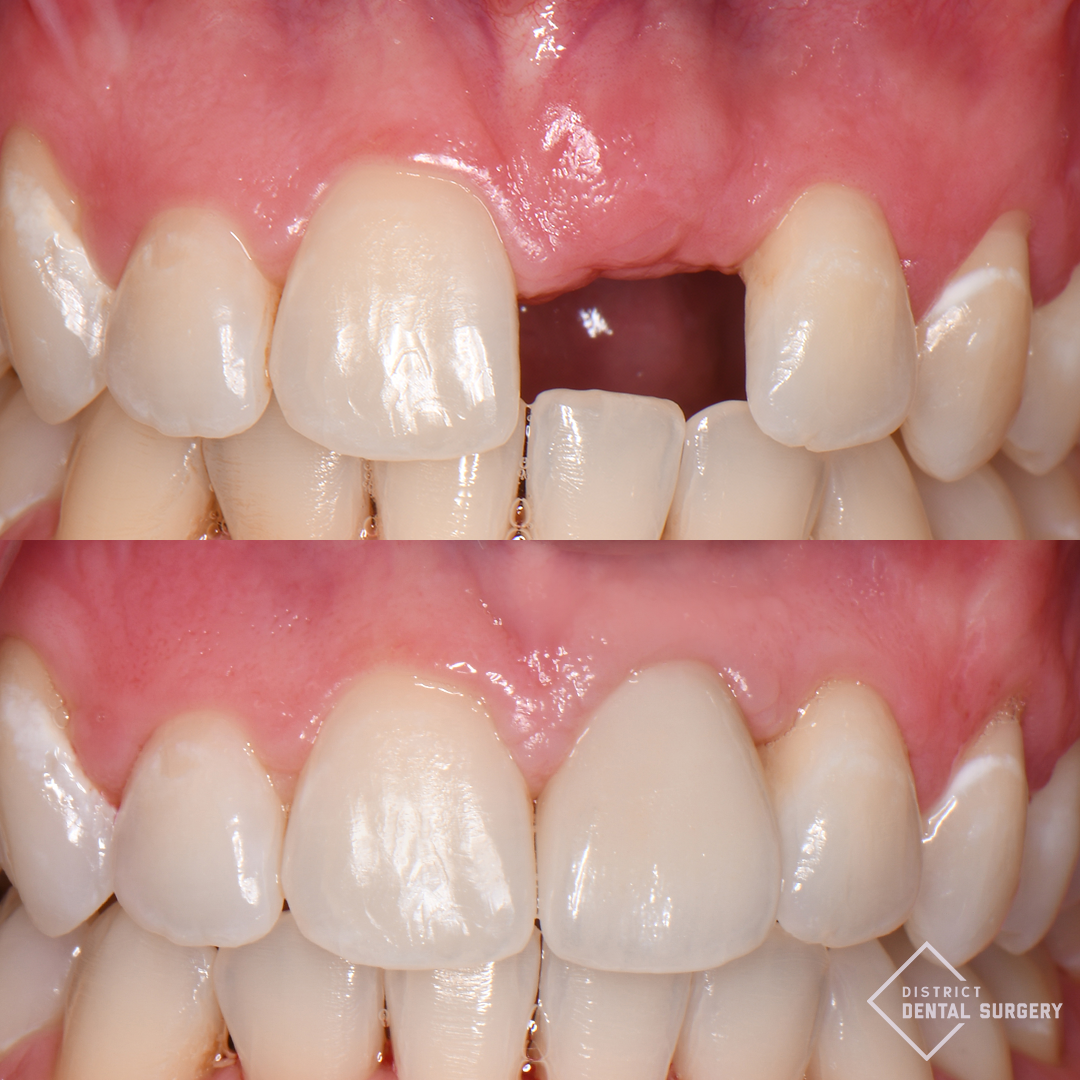
Dental Implant + Bone Grafting
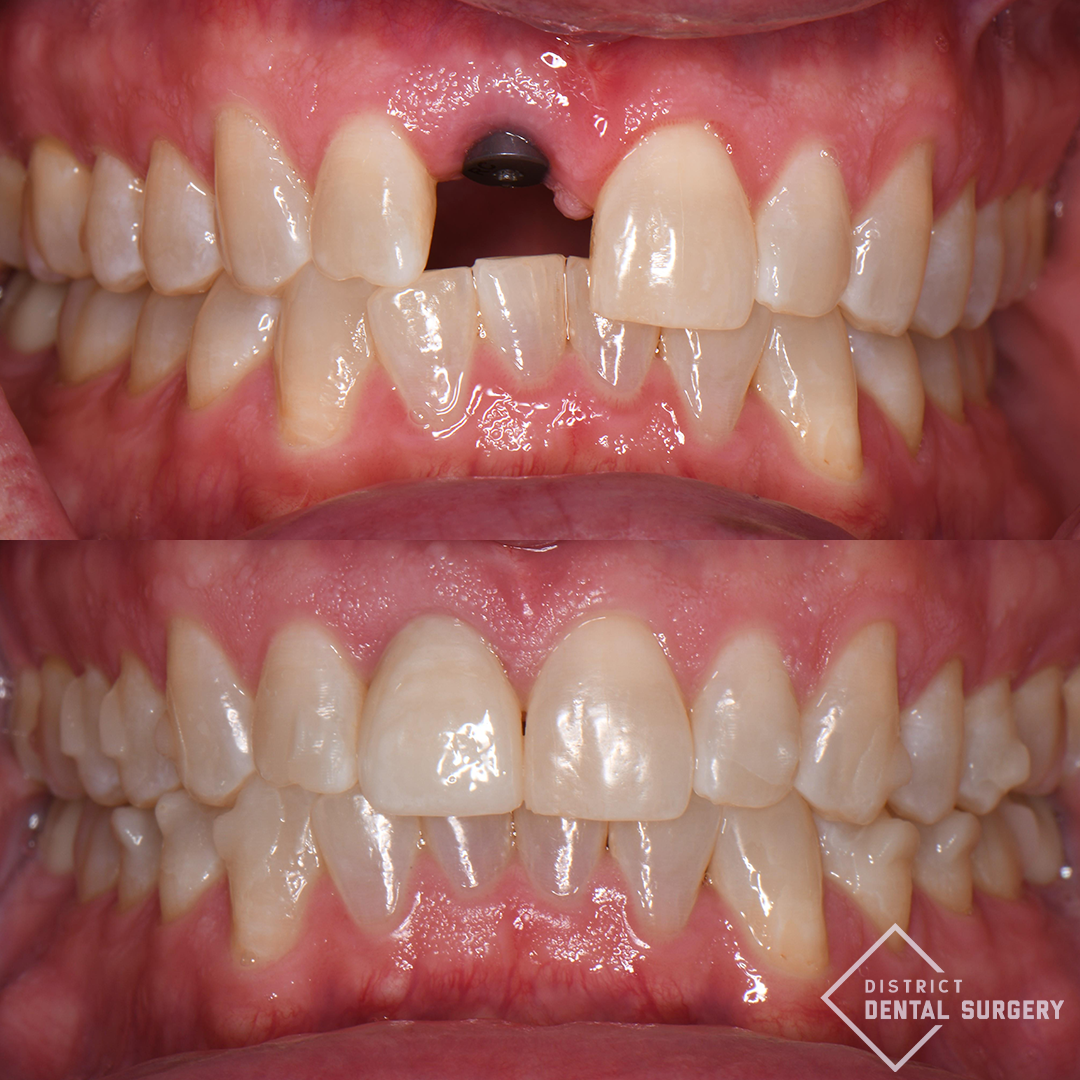
Dental Implant
Testimonials
What Patients Are Saying
Dr. Yousefi was fantastic. She was calm, funny, and capable. She immediately put me at ease (I was pretty anxious). I have never been numbed up so quickly and near painlessly – and the rest of the procedure was then painless, too. She and her team gave clear directions as to what to do for the next 24 hours and beyond, what to eat, how to care for the flipper temporary tooth, and answered all my questions. The staff called me the next business day to follow up and answered more questions that I had come up with by then. Highly recommend.
Phyllis R.
Dr Lucy Johnson was the best! I really am grateful for her help with my dental issue, and so impressed how fast she got me in and that she was so understanding of my dental anxiety! She made sure my anxiety was controlled before my appointment and was extra careful to ensure no pain during the procedure at all. Highly highly recommend!
Halima B.
Dr. Mahboub and her team did a wonderful job for my special issues with two implants that have to be removed. They did their best to keep me comfortable during the long procedure.
Maurice S.
My family and I have been patients for maybe 10-15 years! After trying a bunch of different dentists, we found Dr. Yousefi and have been happy with her team and their services ever since. She has helped us with minor issues as well as major long-term care, including a broken tooth and a few implants. The service has always been amazing, and we are very happy with the quality and expertise here. The new, amazing facilities with super convenient parking are just the cherry on top!
Dmitry K.
I was referred to District Dental for surgery, and it turns out that they are one of the best dental offices I have ever been to. The office is very modern and clean, and the employees are friendly and knowledgeable. I had no pain after my surgery, and my recovery was excellent.
Greg C.
I had a front tooth extraction with a bone grafting procedure done by Dr. Lucy Johnson, and the experience was excellent from start to finish. She explained everything clearly, made me feel completely at ease, and everything went so well during the surgery.
The recovery has gone better than expected. I was thinking that my temporary would look rugged, but it looks better than my natural tooth! The procedure was painless and recovery has been a breeze- very minimal discomfort. Her team was professional, kind, and responsive throughout. I truly appreciate the level of expertise and compassion Dr. Johnson brings to her work. Highly recommend her to anyone!
Sandra G.
I had gum recession on my molars from brushing too hard. I saw Dr Lucy Johnson and she was amazing. She was kind, patient, and thoroughly explained everything they were doing, including my treatment plan, and answered any questions I had. I couldn’t be happier with my outcome! I would highly recommend.
Dylan P.
Dr. Mahbub is fabulous. She did my periodontal cleaning and carefully explained what she was doing and why. She was very patient, constantly asking if I was ok during the procedure. She provided advice to reduce plaque buildup, and showed me techniques to prevent future plaque. Her professionalism, empathy, and skills are superb.
Ann A.
Two weeks post-surgery and I couldn’t recommend this office more. Both doctors are wonderful and clearly very experienced with a patient-first mindset. The office followed up frequently after my surgery to ensure I was recovering well and to answer any questions. After two weeks, I have no pain from the surgery and the gums have already healed up. If you are in need of any dental surgery work, I would 100% recommend this office!
Michael A.
Sara is an excellent dental hygienist and really cares about her patients. She is very good at providing a regimen to help my gums. Dr. Eskow did my gum revision surgery years ago and he’s the best. I recently needed some more work done around the come on 12 and Dr. Eskow handled it beautifully, and his assistant Emily was great.. And the staff at the front desk always makes it a pleasant visit.
Mimi B.
Sholto S.
I’ve been a patient of Dr. Raha Yousefi for over two years, and she is truly one of the best. From day one, her professionalism and genuine care for her patients were evident. Dr. Yousefi’s expertise in dentistry is outstanding, and she takes the time to explain every step of the treatment, ensuring I feel comfortable and informed. Her warm and compassionate personality makes every visit a pleasant experience, and it’s clear she deeply values her patients. The staff at her practice is equally amazing—always friendly, professional, and welcoming. I highly recommend Dr. Yousefi to anyone seeking a dentist who combines professional excellence with heartfelt care.
Cezanne B.
District Dental Surgery Locations